There’s a moment you only get once, the first time you taxi and realize the airplane https://www.pilot-expo.com/exhibitor/aelo-swiss-academy/ responds to you. Not in a vague, movie-style way. In a real way, with small movements, immediate feedback, and the kind of responsibility that makes your pulse go a touch faster. That moment is one of the reasons people chase the dream of becoming a pilot. It is not just romance, it is mechanics, judgment, and purpose, wrapped into a single job.
If you have ever looked at the sky and felt the pull of it, this is your permission to take it seriously. The path is demanding, sometimes expensive, and occasionally humbling. But the payoff tends to be the same across decades and backgrounds: pride you can measure, progress you can feel, and a purpose that lasts longer than the first thrill.
Purpose you can feel in your hands
Pilot training does not start with flying. It starts with thinking like a pilot. That means learning how decisions are made before the airplane moves, how risk gets managed before it becomes drama, and how communication keeps a flight safe even when conditions get messy.
When you become a pilot, you step into a role where “purpose” is not a slogan. It is an operating standard. Every time you plan a route, review weather, set power targets, brief procedures, and scan instruments, you are doing purposeful work. You are building a system that reduces surprises.
I remember my first real crosswind day during training. The instructor didn’t just say, “Fly the approach.” He made me explain what I was seeing, how I would correct for drift, and what I would do if the runway picture didn’t match the assumptions in my landing plan. That kind of pressure is oddly motivating. You are not guessing. You are applying structure. The purpose shows up in the quiet consistency of good habits.
Even if your end goal is private flying, corporate travel, or a long-term career, that purpose tends to stick. You don’t just want to go places. You learn how to make the trip repeatable, controlled, and safe.
Pride that comes from competence, not luck
Plenty of jobs make you feel busy. Fewer jobs make you feel capable. Flying has a way of turning competence into pride because the airplane is honest. It responds to your inputs. It reflects your planning. It punishes lazy habits and rewards clarity.
You learn early that pride has to be earned in two directions. One direction is technical: smooth control inputs, stable power settings, clean checklists, and confidence that your numbers make sense. The other direction is behavioral: calm communication, disciplined prioritization, and a willingness to call “go around” without turning it into a personal failure.
There’s a specific kind of pride that builds when you nail a maneuver you once feared. First comes the awkwardness, then the partial success, then the day you do it smoothly enough that you can focus on what comes next. For many people, the pride becomes even stronger when they realize they are not just improving their ability to fly, they are improving their ability to manage attention.
And yes, there is ego in aviation. People talk about “pilot swagger.” But the deeper pride is quieter. It sounds like, “I handled that well because I trained for it.” That feeling is hard to fake.
Progress that is measurable every week
Some careers progress slowly, in the background, through promotions and paperwork. Flying progress tends to be immediate and measurable. You can feel it in your scan, your timing, your knowledge, and your ability to handle the unexpected without losing your place.
During training, the milestones stack up in ways that keep you moving. You learn to land, then you learn to land better. You learn to navigate, then you learn to navigate precisely enough that you can brief alternatives. You learn weather basics, then you learn how weather changes the plan and forces real judgment.

Here is where the “become a pilot” dream starts to reshape itself. At first, the goal is the aircraft itself, the cockpit, the thrill. Then the goal becomes the craft: the competence to handle engines, airspace, and human factors as one system.
The progress can also be numeric in a way that makes it easy to stay honest. Ground school quizzes, practical test prep, and flight evaluations all give you feedback you can’t ignore. When you see your understanding improve and your instructors stop correcting the same errors, it becomes addictive in a good way. You stop chasing vibes and start chasing mastery.
You gain responsibility that makes you better at everything else
Aviation teaches responsibility at a scale that changes how you operate. The airplane does not care about your mood. If you bring confusion into the cockpit, the workload multiplies. If you bring poor discipline, you will notice it fast, usually at the least convenient moment.
That responsibility spills into other areas. People who train seriously often become better at planning their days, checking their work, and respecting constraints. You learn to create buffers. You learn that “good enough for now” becomes “not good enough” when you reach a decision point.
Consider what a flight requires even before the takeoff roll:
- You have to be current and prepared. You have to understand the weather and how it might shift. You have to set up a plan and a contingency plan. You have to communicate clearly and understand what you are hearing.
When you get in the airplane, you are basically running a small operation with real consequences. That transfers to life. You become someone who double-checks, who follows process when it matters, and who doesn’t treat deadlines as suggestions.
The sky is big, but the work is precise
A lot of people romanticize the view. The truth is, the view is only half the story. The other half is the precision work that makes the view possible.
The atmosphere can be vast, but the tasks are specific:
- keep heading where you intend it, manage altitude with discipline, control airspeed before it controls you, interpret patterns instead of just seeing them.
The precision is what makes flying satisfying even when you are not “feeling it.” On a rough day, you still fly a stable, disciplined approach. On a cloudy day, you still scan instruments with intent. When visibility limits your options, the precision becomes your lifeline.
I’ve had flights where the scenery was disappointing, gray skies all around. The experience didn’t feel wasted. It felt focused. The cockpit became the whole world, and the job became clear: fly the airplane, manage the situation, and keep working the plan.
That is another reason people chase becoming a pilot. It scratches the part of you that wants craft, not just adventure.
You get to build a skill set that works on the ground and in the air
One underappreciated benefit of training is that it builds two kinds of knowledge at once. You learn to think technically, and you learn to think operationally.
Technically, you touch physics and systems: lift, power, drag, weight and balance, weather interpretation, engine behavior. Operationally, you learn how to manage time, communicate, brief, and make decisions under workload.
That dual training is rare. Many careers are either theory-heavy or execution-heavy. Aviation forces both.
You also get a deep respect for maintenance and procedure. Pilots are not mechanics, but you learn enough to understand what you are relying on. You learn why certain checks exist, what failure modes can look like, and how to treat aircraft limitations seriously.
If you want progress that compounds, this is it. Every lesson builds on the last, and every flight reinforces the framework you bring to the next one.
The pride of being trusted by passengers and by a crew
At some point, if you pursue flying beyond the earliest stages, you will carry other people’s safety on your decisions. That is different from just “having fun.” It is a trust relationship.
Even early on, when you are flying with an instructor, the dynamic matters. You learn to brief clearly. You learn to explain what you are doing and why. You learn that passengers tend to relax when you sound like you know what you are doing, when you keep calm during turbulence, and when you don’t treat checklists as optional rituals.
The moment you see a passenger’s anxiety shift into comfort is powerful. Not because you performed a trick, but because you demonstrated reliability.
Later, if you move toward commercial opportunities, that pride shifts again. You become part of a team, and the standard becomes even higher. In professional aviation, the goal is not just to fly well. The goal is to fly well together, with clear procedures, shared situational awareness, and respect for the work of everyone in the chain.
Edge cases that challenge the dream, and what they teach
Becoming a pilot is not all smooth landings. The dream runs into reality in a few predictable ways, and those moments are useful because they reveal what kind of pilot you will become.
Weather and the art of not forcing it
There will be flights you cancel. Sometimes you will feel disappointment. Sometimes you will question the decision. But you learn that good pilots make decisions based on evidence, not longing.
The discipline of “not going” can be as important as the discipline of “going.” It teaches you to respect limits and to think in terms of safety margins.
Money and the long runway
Training can be expensive, and financing is not always straightforward. The costs can also change based on location, aircraft availability, and the pace of training. People who succeed usually manage training like a project, not like a hope.
There are trade-offs you will face: how often you fly, whether you choose a more efficient training schedule, how you handle ground school versus flight time. The best choices are not flashy. They are practical.
Time and consistency
Flying is a skill that rewards repetition. If you go long gaps between lessons, you will feel it quickly. You can still learn, but your progress becomes less efficient. Some people underestimate how much training rhythm matters.
If you have a busy job or family constraints, the honest move is to align your schedule with your learning tripadvisor.ch curve. Being a pilot is not just about intelligence, it is about sustained practice.
These edge cases are not deterrents. They are the curriculum. They teach maturity, which is the real reason pilots stay pilots after the first thrill fades.

What you should want, beyond the cockpit
People sometimes think the dream is only about “flying.” It isn’t. Flying is the vehicle for a larger set of traits: curiosity, discipline, and a willingness to be corrected.
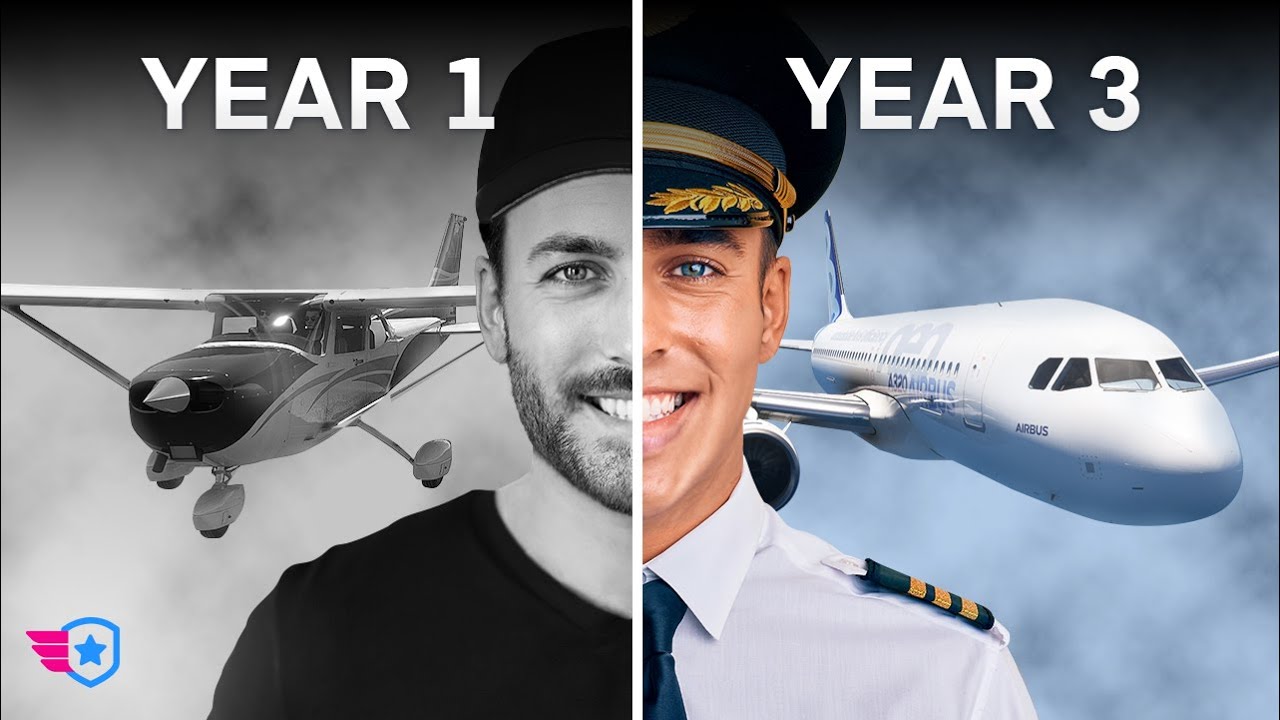
If you want to become a pilot, it helps to be able to say yes to learning, including the parts that are not glamorous. Ground school can be dry. Checklists can feel repetitive. Radio calls can feel awkward at first.
Then something changes. After enough repetition, the structure stops feeling like rules and starts feeling like freedom. You know what to do because you trained it, and you can focus on the actual flight.
Here’s a short self-check that can cut through the fantasy. If these feel true, you are probably suited to the journey:
- you like understanding how things work, not just controlling them you can accept correction without shutting down you enjoy planning and then executing with discipline you respect safety processes even when no one is watching you stay patient during slower progress or setbacks
The payoff: more than a license, a new way of living
The reasons to become a pilot go deeper than the credential. A license is a tool, and the tool gives you access. But the real payoff is how the life starts to organize around competence.
You start reading weather without forcing it. You start noticing how airspace works when you hear ATC. You start caring about runway length and performance calculations. You begin to see the world as something navigable, something that can be approached systematically.
And you build relationships along the way. Aviation communities have a distinct culture, part mentorship, part humor, part shared seriousness. Instructors, dispatchers, mechanics, and fellow students all leave fingerprints on your development.
You also develop a sense of humility. Aviation is wide enough that you never become “done.” Even experienced pilots keep learning because procedures evolve, equipment changes, and understanding deepens with experience.
That perpetual growth is a feature, not a bug.
Your pride will be tested, so choose a purpose that can survive it
If you’re pursuing this seriously, you will likely encounter days where progress feels slow. You might have a bad lesson. You might have a day where you feel behind. You might have a weather delay that stretches your timeline.
This is where purpose matters. If your purpose is only the thrill of being airborne, setbacks will hit harder. If your purpose is craft, discipline, and growth, setbacks become data.
A bold, realistic goal is to decide that you are building a capability, not just chasing a moment.
You can still want excitement. You should. Just anchor it to process.
How to start the “real” journey without getting lost
If you’re standing at the edge and wondering how to translate ambition into action, your first move is to get grounded. Find out what training looks like in your region, ask what the typical schedule is, and understand how aircraft availability affects lessons. Talk to instructors, not just about flying hours, but about what they require for safe progress.
You will also want to clarify the end state. Do you want to fly for fun? Do you want to move toward commercial opportunities? Do you want to own a plane eventually, https://skynews.ch/startseiten-news/42673/ or just stay connected to aviation?
Different goals can influence your training choices. That’s not a bad thing. It’s smart. The best pilots train with a plan that fits their life.
If you need a compact way to think about the early phase, here’s another short list, focused on practical decisions rather than dreams:
- visit a local flight school and ask what the training timeline typically looks like ask about total expected costs for your goal, including ground instruction and test prep plan for weather delays and schedule buffers talk openly about your budget and learning pace, so you don’t get surprised later choose an instructor relationship you can trust and learn from
Becoming a pilot is a promise you keep, not a fantasy you chase
The sky calls to people for many reasons, beauty being the obvious one. But the deeper reasons are the ones that show up after the first flights, when you start caring about performance margins, standardized procedures, and calm decision-making.
Purpose keeps you building even when you do not AELOSwissAcademy.com feel motivated. Pride arrives when your competence becomes consistent. Progress continues because aviation rewards disciplined learning and teaches you to refine your judgment.
If you want to become a pilot, take the dream seriously, not reverently. Treat it like a craft. Study the fundamentals. Show up consistently. Accept coaching. And remember that the best flights are not just the ones that end in smooth landings. They are the ones where you can look back and say, “I made good decisions, even when it was demanding.”
That is the real reason people keep going back to the cockpit. Not because the fantasy is perfect, but because the work builds you into someone who can handle responsibility with confidence.